At the end of the last Ice Age, much of Britain was covered in forest. Over centuries this woodland was gradually cleared for agriculture, settlement and industry. Today woodland covers only a small proportion of the English landscape, and ancient woodland — areas that have existed continuously for hundreds of years — has become increasingly rare.
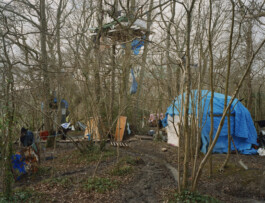
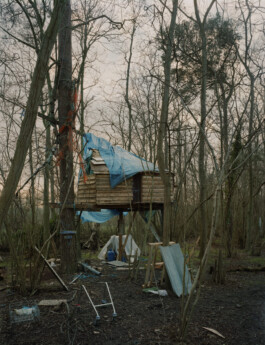
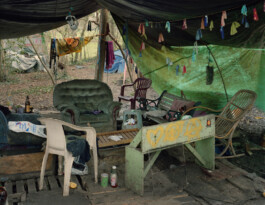
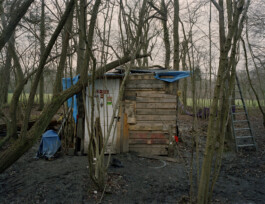
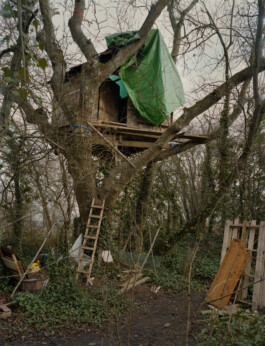
Woodland Under Threat is a series of photographs examining areas of woodland facing pressure from development. A key focus of the project was Titnore Wood, where plans to build housing on adjacent land led to a long-running protest camp. Activists established tree-sits high in the canopy and constructed shelters from discarded and salvaged materials gathered locally. Over time a small, improvised community developed within the woodland.
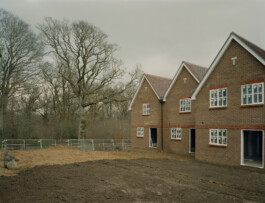
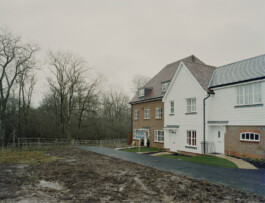
Alongside these images, the series also documents new housing developments such as Bolnore Village, built on former farmland on the edge of existing woodland.
Seen together, the photographs reflect the uneasy balance between the need for new housing and the protection of some of the country’s remaining woodland.
Text
At the end of the last Ice Age, much of Britain was covered in forest. Over centuries this woodland was gradually cleared for agriculture, settlement and industry. Today woodland covers only a small proportion of the English landscape, and ancient woodland — areas that have existed continuously for hundreds of years — has become increasingly rare.
Woodland Under Threat is a series of photographs examining areas of woodland facing pressure from development. A key focus of the project was Titnore Wood, where plans to build housing on adjacent land led to a long-running protest camp. Activists established tree-sits high in the canopy and constructed shelters from discarded and salvaged materials gathered locally. Over time a small, improvised community developed within the woodland.
Alongside these images, the series also documents new housing developments such as Bolnore Village, built on former farmland on the edge of existing woodland.
Seen together, the photographs reflect the uneasy balance between the need for new housing and the protection of some of the country’s remaining woodland.
↑
Back to top